

In the evolving landscape of industrial recycling, Polyvinyl Chloride (PVC) stands out as both a versatile material and a significant challenge. PVC is ubiquitous in various industries, from construction and automotive to healthcare and consumer goods, due to its durability, versatility, and cost-effectiveness. However, its widespread use has also led to substantial environmental concerns, particularly regarding disposal and recycling. Recent advancements in PVC recycling technology and methodologies offer a glimpse into a more sustainable future, yet several hurdles remain.
The latest innovations in PVC recycling focus on improving efficiency and reducing environmental impact. Mechanical recycling, the traditional method involving grinding PVC into small particles, has been refined with better sorting and purification techniques. These improvements enhance the quality of recycled PVC, making it more suitable for high[1]demand applications.
Chemical recycling, a more recent development, breaks down PVC into its basic chemical components. This process allows for the recovery of nearly virgin-quality materials, which can be reused in new products. Advances in pyrolysis and solvolysis technologies have made chemical recycling more viable and cost-effective. Additionally, researchers are exploring bio-based additives and catalysts to make the process even more environmentally friendly.
A significant trend in industrial PVC recycling is the shift towards closed-loop systems, where PVC products are designed with their end-of-life recycling in mind. Companies are increasingly adopting a circular economy approach, ensuring that PVC products can be easily dismantled and recycled into new products without significant degradation in quality. This approach not only minimizes waste but also reduces the demand for virgin PVC, lowering the overall environmental footprint.
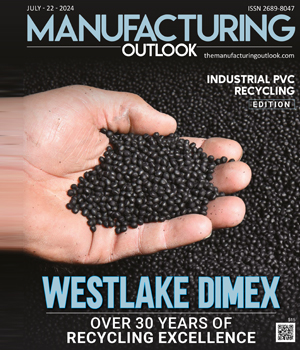
In this edition, we have featured Westlake Dimex. With a legacy of over 30 years, the company has mastered transforming recycled plastics into high-quality products, proving that sustainability and success go hand in hand. It optimizes the process of identifying and capitalizing on best-suited waste streams.